viernes, 8 de mayo de 2020

THE ZIPPS - Kicks And Chicks; Ever Stoned [Netherlands freakbeat, psychedelic1966-1969] 2013 Pseudonym CDP-1111


Dutch freakbeat band the Zipps formed in Dordrecht, the Netherlands in the fall of 1965. Lead guitarist Peter Nuyten and drummer John Noce Santoro previously teamed in the Moving Strings, who issued a pair of singles on the Delta label before dissolving, while singer/guitarist Philip Elzerman and vocalist Jan Bek came to the Zipps lineup from the Beat Town Skifflers, and bassist Theo Verschoor tenured in the Twilights. Bek quit the Zipps prior to the release of their debut single, "Roll the Cotton Down," issued in early 1966 on the Op-Art label; after signing to the Relax label, the group issued two more singles that year, "Chicks and Kicks" and "Beat and Poetry." Beginning with 1967's "Marie Juana" -- a record which required significant lyrical revisions before Relax censors would agree to its release -- the Zipps steered their garage-influenced sound towards psychedelia, and thanks in part to their hallucinatory light show, they earned the sobriquet "The Dutch Pink Floyd"; Elzerman openly espoused drug use in interviews, and stickers reading "Be Stoned! Dig: Zipps Psychedelic Sound" were distributed at live dates. After backing French pop singer Philippe Salerne on his singles "Elle" and "Venez Voir Comme On S'Aime," the group replaced Santoro with drummer Wim Klein, but after a December 1967 date in support of the Electric Prunes and the Soft Machine, the Zipps dissolved when Nuyten, Verschoor, and Klein all announced their exit. Elzerman and Santoro reformed the group in early 1968, adding guitarist Dick Visschers and bassist Ruud van Seventer for one final single, 1969's "When You Tell It, Tell It Well..!" The Zipps eventually disbanded for good, and in 1999, the Dutch label Pseudonym compiled all of their singles, the Philippe Salerne sessions, and a handful of live cuts for a retrospective titled Be Stoned! Dig: Zipps.

jueves, 7 de mayo de 2020

SNEAKERS - Nonsequitur Of Silence [USA pop, power pop 1976-79] 2006 Collectors' Choice Music CCM 733


They called the Flatlanders more of a legend than a band, and the same holds true for the Sneakers, a power pop group from North Carolina that was known more than heard. That it was known is down to its co-leaders Chris Stamey and Mitch Easter, two figures that loomed large in the American underground in the ‘80s as the leaders of the dB’s and Let’s Active, respectively (Sneakers drummer Will Rigby also was a founding member of the dB’s; Easter also produced the early R.E.M. album in tandem with Don Dixon, who helmed the Sneakers EP). The Sneakers had an EP and an LP to their name, but they were local independent efforts at a time when independent albums truly did not leave their locality, so they were hard to find for many, many years -- a situation that was somewhat rectified by the 1992 release Racket, which was the first reissue of this material, but in somewhat bastardized form, as it was remixed and partially re-recorded in places. Fifteen years later -- nearly as a long a span of time from their EP to their first LP -- Stamey and Easter compiled the Nonsequitur of Silence CD for Collectors Choice, rounding up almost all of the EP, LP, and assorted cuts from Racket, plus three unreleased bonus tracks. To put it mildly, this is a big deal, the first real comp of one of the legendary forgotten bands, and Nonsequitur of Silence does more than satisfy the cult who long waited for this reissue: it will convert non-believers, too. This almost feels as long ago, if not more so, than the Beatles and British Invasion that fueled the Sneakers; the group’s homemade replicas of ringing ‘60s guitar pop hinted toward punk, new wave, jangle pop, and ultimately indie rock, but lacked all of the stylized self-absorption that followed as well. Like Big Star before them, the Sneakers were pop obsessives recording in a blissful vacuum, obsessed with the past but not living with it, so their recordings have a twitchy vitality that remains bracing and fresh years later. The music on Nonsequitur of Silence may belong to a cult, but it’s an important one, acting as the bridge between Big Star and R.E.M., pointing the way to such latter-day popsters as Guided by Voices and the Elephant 6 collective, too. Nevertheless, the best way to think of the Sneakers is not in terms of history, but rather, as a band that produced some brilliant power pop during their brief period together, pure pop that remains purely pleasurable all these years later and has never been better heard than it is here.

martes, 5 de mayo de 2020

THE SHOCKING BLUE - Live In Japan [Netherlands pop, rock 1972] 2009 Recordsmen Communication RCM 00106 2


The Shocking Blue formed in The Hague in 1967. The band spawned a number of psychedelic rock hits during the 60s and early 70s, including 'Never Marry a Railroad Man', 'Mighty Joe', 'Love Buzz', 'Blossom Lady', 'Inkpot' and 'Venus'. The latter became their biggest hit and went to No. 1 on the U.S. Billboard Hot 100 and many other countries during 1969 and 1970. The band had sold 13.5 million discs by 1973. The recording of the album Live In Japan took place in their prime years as they were successfully and regularly touring around the globe. The album was recorded on 28th and 30th of July 1971 at two sold-out Tokyo Koseinenkin Hall shows. It includes some of their biggest hits; 'Hot Sand', 'Mighty Joe', 'Shocking You' and the megahit 'Venus'(the opening and closing song of the album). 

JOE CLARK - TONY GEORGE - One Man Bands [USA folk psychedelic 1976] American Arts, Inc. AAI 1101


Here is that private press, 70's. moog-psych record I promised a while back. Although technically I should have only promised half a record of moog-psych (as I will explain).

Now I really know nothing about Tony George (aka Anthony M. George), Joe Clark (aka Joseph A. Clark), or the American Arts, Inc. record label out of Baltimore. This was the 1st (& I suspect the last) release on the label and, as Clark & George play all the instruments on their respective sides as well as listing themselves as composers, producers & engineers, I suspect they also fronted the cash for the record. But I do have opinions.

The l.p. is a split release between two artists whose only common denominator appears to be that they are the sole performer on their side of the record.

The real ace here is Tony George's extended, moog-psych-freakout, "And He Thought" (the sub-parts are labelled in the tracklist below). There is some deep, crypto-religous/philosophical message here but unless you've obtained (however temporarily) some alternate state of consciousness I wouldn't worry about it but just sit back and coast on Tony's sine wave interupted by the occassional rant. Tony asks, "Did you ever think happiness is to know me?" I'm pretty sure the answer before listening will be no (& I'm pretty sure none of you have heard this before), but afterward you may change your answer. Or maybe not. Happiness is not the word I would chose to describe your listening experience, but this is some weird-ass shit.

Joe Clark also performs solo but is certainly using some multitracking as he plays more conventional rock instruments. Clark's side has its moments and the music is fine, but I wouldn't have posted it if it weren't weren't paired with Tony George. Clark generally sounds like low-budget, late-60s/early-70s rock with some psych influences. There are also some odd moments--like the song about America (it was the bicentenial). However, overall, I think Joe would have been better off if he skipped the lyrics entirely. Sometimes they get downright confusing (& not in a weird, stream-of-conciousness, psychedelic way)--e.g., who is being addressed in "Don't Turn Your Back" (the 1st song)--it seems to change part way through the song? Other tracks (like Dreaming of You & Drinkin' 'n' Thinkin'...) are nice enough pop songs but never more than component.

From the legendary blog: Play It Again, Max

lunes, 4 de mayo de 2020

ALICE'S ORB - Even The Grass Is Full Of Acid [UK neo psychedelic 1992] Strangely Brown SB 8


UK Alice's Orb are a part time, principally studio based band and one of the few able to do a convincing imitation of early Pink Floyd. Their origins lie in a noisy Luton pub rock band, The Twitch, who were active in the area from 1983-87. This band split, but Jeff Ross and two of the other members kept The Twitch going for another two years. Some of this band's material was released posthumously. After The Twitch folded, Jeff joined a punk band called Chocolate Foetus, the pinnacle of whose career was supporting the Mega City Four. Inspired by listening to the home made efforts of Bevis Frond, he next bought a four track portastudio and began recording his own music along with Martin and Alan from The Twitch. The results of these early sessions were released as the Alice's Orb tape, the first release on Jeff's Strangely Brown label. Like all the Alice's Orb tapes, this first one was obscure (although it is still available from Acid Tapes), but an idea of the quality of Alice's Orb at this time can be gained from the three tracks that made it onto the debut album, Mr. Phelps, Mi Lady and Teardrops. They are all very primitive and with muddy sound quality, although Teardrops in particular is a fine song with its bizarre sound effects and spoken mid section. The debut album, Even The Grass Is Full Of Acid, took its strange title from a line in a Star Trek episode and was a compilation of material that appeared previously on tape. Despite the primitive nature of most of the recordings (even though Jeff had upgraded to a six track somewhere along the line), most of the material came over quite powerfully. Alice's Orb is a suitably weird intro, mutating from a spacey synth passage into a chorus of You Are My Sunshine. Coalbarn Blues is the first of the many songs which have a strong Syd Barrett feel to them and is full of strange sound effects and jangling, discordant guitar. Telescope takes the Barrett feel further with feedback and Floyd-like organ set against a subsonic bassline; the song descends into psychedelic mayhem mid song. The percussion was played by a guest musician called Rusty. Horace's Magick Pyjamas is a fast, hard rocking instrumental with some inventive guitar work from Alan and one of the filthiest bass lines ever. The stand out track of the album is another Barrett-influenced number, Psycho Doodle, a very odd, eerie song with more pulsing bass guitar, sparse percussion and vocals pitched very low. The original demo version of this song has appeared on a French compilation, Come Together. Around the same time, Alice's Orb also supplied a song for the Psychedelic Psauna compilation.

viernes, 1 de mayo de 2020

JOHN PHILLIPS - Jack Of Diamonds [USA rock, pop 1972-73] 2007 Varèse Vintage 302 066 819 2


Jack of Diamonds featuring material from 1972 and 1973 to approximate what might have been a second album.

John Phillips as a member of the Mamas & the Papas, he's been heard and loved by millions, and he's part of the very fabric of American folk and rock history. But thanks in no small part to huge quantities of drugs, Phillips fell off fast, and for most of the 1970s on up he wandered wasted and restless, his sole commercial success a co-write credit on the Beach Boys' unctuous "Kokomo" before dying of heart disease in 2001.

→→→→

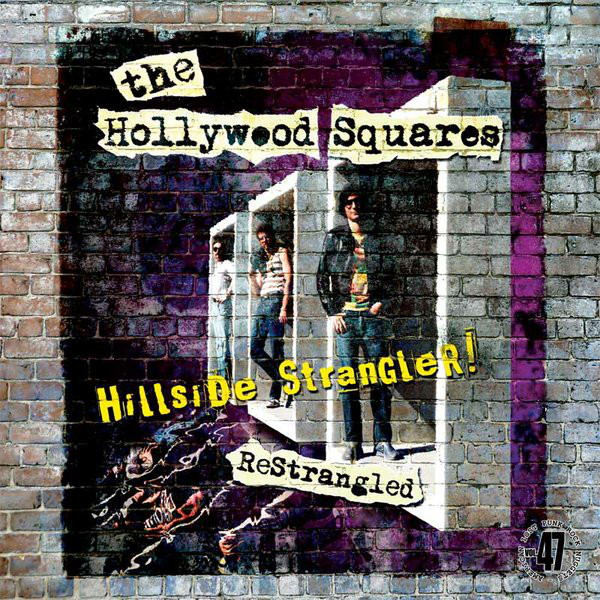
THE HOLLYWOOD SQUARES - Hillside Strangler Restrangled [USA punk rock 1977-1978] 2006 Bluside Records BSD-1313


The Hollywood Squares were an American band formed in Los Angeles/California in 1977. They are probably best known for their classic "Hillside Strangler". They broke new ground on the Southern California musical landscape, influencing punk and new wave bands for generations to follow. Guitarist Eddie Vincent and drummer Tad, having played together in various bands since the early seventies, found themselves in London after a gig in Switzerland during the famous punk summer of 1977. Enthusiastically responding to the energy and mayhem of the punk explosion, they were inspired, once back home in L.A., to form the power trio they dubbed the Hollywood Squares. In 1978 they released in a very limited edition on the trio's own Square Records label their first 7.